
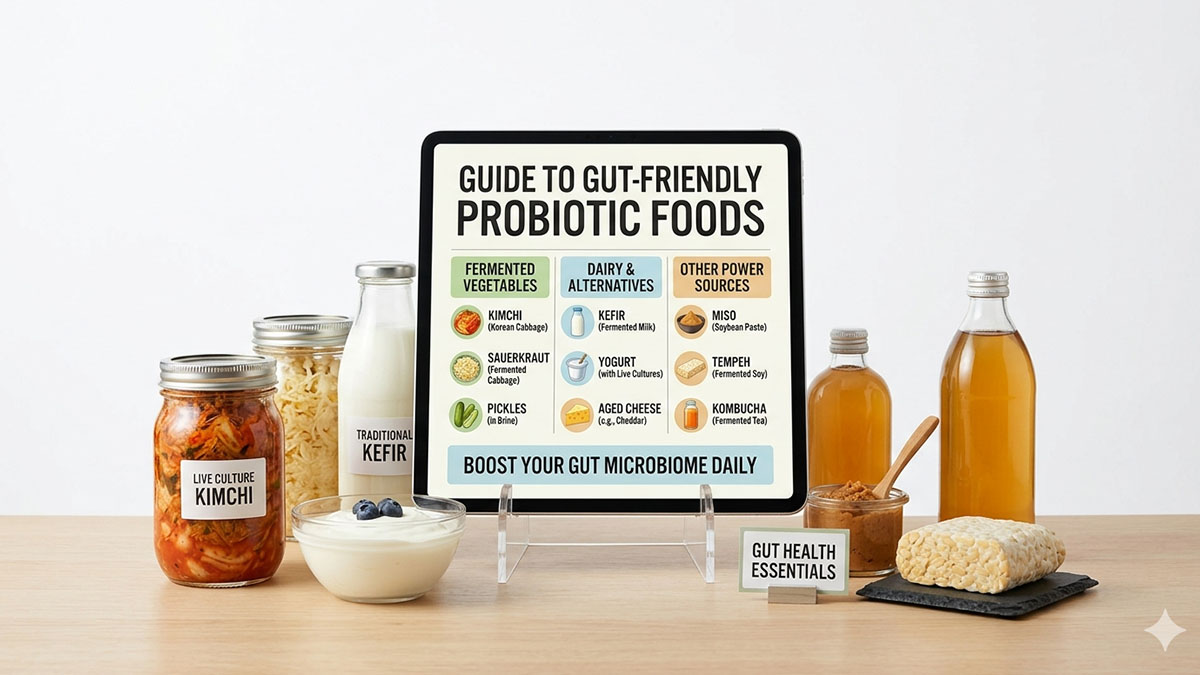
When we walk into a kitchen, we usually think about flavors, recipes, and the act of cooking. We think about the heat of the stove and the smell of fresh herbs. However, there is a hidden world living right inside our refrigerators and pantries that we often ignore. This is the world of fermentation and beneficial bacteria. For centuries, humans across the globe have used the power of tiny, invisible organisms to preserve food and enhance its nutrition. Today, modern science is finally catching up to this ancient wisdom, showing us that a healthy body starts with a happy gut. If you have been feeling sluggish, bloated, or just not like your usual self, it might be time to look at a probiotic foods list for gut health. These living foods are more than just a trend; they are a fundamental requirement for a robust immune system and a clear mind.
To understand why these foods are so important, we have to look at the human microbiome. Inside your digestive tract, there are trillions of microorganisms mostly bacteria that help you break down food, produce vitamins, and protect you from harmful pathogens. Think of your gut as a busy city. You want the “good” citizens (probiotics) to outnumber the “troublemakers.” When the balance shifts and the bad bacteria take over, it can lead to inflammation, digestive issues, and even mood swings. This is because your gut and your brain are constantly talking to each other through the vagus nerve. By regularly consuming items from a probiotic foods list for gut health, you are essentially sending in reinforcements to keep the peace and ensure your body runs like a well-oiled machine.
One of the most famous and accessible items on any probiotic foods list for gut health is yogurt. But not all yogurts are created equal. When you are at the grocery store, you must look for the words “live and active cultures” on the label. Many commercial yogurts are heat-treated after fermentation, which kills off the very bacteria you are trying to consume. High-quality, plain Greek yogurt or traditional pot-set yogurt is a fantastic source of Lactobacillus and Bifidobacteria. These strains are known for their ability to improve lactose digestion and support the intestinal barrier. If you find plain yogurt too sour, try adding fresh berries or a drizzle of raw honey rather than buying the pre-sweetened versions, which can contain enough sugar to feed the “bad” bacteria you’re trying to crowd out.
For those who are looking for a dairy-free option that packs an even bigger punch, kefir is the answer. Kefir is a fermented milk drink (though water kefir and coconut milk kefir also exist) made with “grains” of yeast and bacteria. While yogurt usually contains only a few strains of bacteria, kefir can contain up to 30 or more different types of probiotics and yeasts. This diversity makes it one of the most powerful entries on a probiotic foods list for gut health. It has a slightly fizzy, tart flavor and can be used in smoothies or drank straight from a glass. Because the fermentation process breaks down the lactose, many people who are lactose intolerant find that they can enjoy milk kefir without any digestive distress.
Moving into the world of fermented vegetables, we find sauerkraut and its spicy cousin, kimchi. Sauerkraut is simply finely shredded cabbage that has been fermented by lactic acid bacteria. It is important to note that the “shelf-stable” sauerkraut found in the middle aisles of the supermarket is usually pasteurized and sits in vinegar, which means it doesn’t contain live cultures. To get the benefits for your microbiome, you need to look for raw, refrigerated sauerkraut or make it yourself at home with just cabbage and salt. Kimchi, a staple of Korean cuisine, takes this a step further by adding garlic, ginger, and chili flakes. These ingredients not only provide probiotics but also offer anti-inflammatory benefits, making these vegetables a double win for your health.
Another heavy hitter on the probiotic foods list for gut health is miso. Miso is a traditional Japanese seasoning made by fermenting soybeans with salt and a type of fungus called koji. It is most commonly known as the base for miso soup, but it can also be used in dressings, glazes, and marinades. Miso is rich in a probiotic strain called Aspergillus oryzae, which has been shown to reduce the risk of digestive disorders and improve overall gut function. Since miso is a fermented paste, you should avoid boiling it for long periods, as high heat can destroy the delicate beneficial bacteria. Instead, whisk it into your soup or sauce at the very end of the cooking process to keep the probiotics alive and well.
If you enjoy a refreshing drink, kombucha should definitely be on your radar. Kombucha is a fermented black or green tea that has been around for thousands of years. It is produced by a symbiotic culture of bacteria and yeast, often referred to as a SCOBY. During the fermentation process, the bacteria consume the sugar in the tea and produce B-vitamins, organic acids, and a wealth of probiotics. It is a fantastic replacement for sugary sodas because it provides that signature fizz and a complex flavor profile without the inflammatory effects of high-fructose corn syrup. When choosing a kombucha from the store, check the sugar content on the back, as some brands add a lot of juice for flavor, which can increase the calorie count.
Tempeh is an excellent plant-based protein source that also happens to be a probiotic powerhouse. Unlike tofu, which is made from soy milk, tempeh is made from whole fermented soybeans that have been pressed into a firm, nutty cake. This fermentation process not only introduces beneficial bacteria but also reduces the amount of phytic acid in the soy, making the minerals easier for your body to absorb. Tempeh is incredibly versatile; it can be marinated, grilled, or crumbled into tacos. It is a perfect example of how a probiotic foods list for gut health can overlap with a high-protein diet, proving that you don’t have to sacrifice muscle-building goals to take care of your digestion.
Pickles are a childhood favorite for many, but there is a big difference between a “vinegar pickle” and a “fermented pickle.” Most pickles you see on store shelves are made by soaking cucumbers in vinegar and spices. While they are tasty, they are not a source of probiotics. To find the gut-healing version, you must look for “lacto-fermented” pickles that are cured in a brine of water and salt. These are usually found in the refrigerated section. The natural bacteria on the skin of the cucumber go to work in the salty water, creating a sour, crunchy snack that is alive with probiotics. They are low in calories and high in flavor, making them one of the easiest snacks to add to your daily routine.
Incorporating these items from the probiotic foods list for gut health into your life doesn’t have to happen all at once. In fact, if your gut isn’t used to a lot of fermented foods, it is better to start slow. Try adding a tablespoon of sauerkraut to your salad, or swap your afternoon soda for a small glass of kombucha. As your microbiome adapts, you can gradually increase the variety and quantity of these foods. You will likely notice that your digestion becomes more regular, your skin begins to clear up, and your energy levels stay more consistent throughout the day. It is a journey of small shifts that lead to a massive transformation in how you feel.
In conclusion, taking care of your gut is one of the most proactive steps you can take for your long-term wellness. Your digestive system is the gateway to your overall health, and by feeding it the right bacteria, you are setting yourself up for success. A probiotic foods list for gut health is your roadmap to a more vibrant life. Whether you are enjoying a bowl of yogurt for breakfast, a tempeh stir-fry for dinner, or a cooling glass of kefir, you are participating in an ancient tradition of healing through food. Listen to your body, experiment with different flavors, and enjoy the process of building your very own “living kitchen.” Your gut will thank you for years to come.