
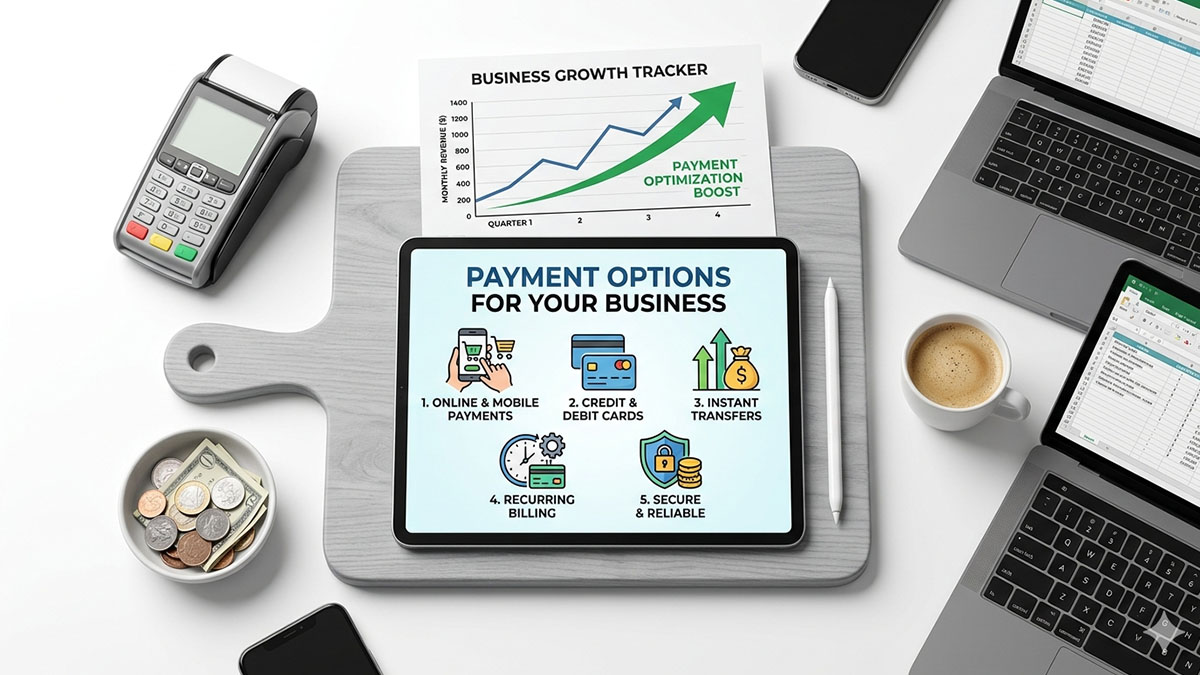
In the fast-moving world of 2026, the way we exchange value has changed more in the last few years than it did in the previous century. For any entrepreneur, whether you are running a cozy neighborhood cafe or a high-tech digital agency, the lifeblood of your operation is how you collect money. If you cannot make it easy for your customers to give you their hard-earned cash, you are leaving growth on the table. Understanding how to manage payments for your business is no longer just a back-office task for an accountant; it is a core part of your customer experience and your brand identity. When a customer reaches the point of purchase, they should feel a sense of security and ease. Any friction at this stage be it a clunky interface, a lack of their favorite payment method, or a slow processing time can lead to abandoned carts and lost loyalty.
To stay competitive today, you must realize that modern consumers expect variety. Gone are the days when simply saying “cash or credit” was enough. Today, people want to pay with their smartphones, their smartwatches, and even through decentralized digital assets. Setting up the right infrastructure for payments for your business means looking at the specific habits of your target audience. If you are selling to Gen Z, mobile wallets and “buy now, pay later” options are non-negotiable. If you are dealing with business-to-business (B2B) clients, you might need robust systems for automated clearing house (ACH) transfers and digital invoicing that can handle large sums with low fees. The goal is to be where your customers are. By providing the right channels, you aren’t just collecting money; you are showing your clients that you understand their needs and respect their time.
Security is the silent partner in every transaction. As hackers become more sophisticated, your responsibility to protect customer data grows. When you look into different platforms for payments for your business, you must prioritize PCI compliance and end-to-end encryption. A single data breach can ruin a reputation that took years to build. This is why many smart business owners are moving toward tokenization. This technology replaces sensitive card information with a unique “token” that is useless to thieves. By investing in secure gateways, you give your customers the confidence to click that “buy” button without hesitation. In 2026, trust is a currency in itself, and a secure payment process is the best way to earn it.
Cost management is another critical factor. Every time a customer swipes a card or taps a phone, a small piece of that sale goes to the processors. While these fees might seem tiny individually, they add up to a significant amount by the end of the year. When evaluating options for payments for your business, you need to look closely at the fee structures. Some companies offer flat rates, which are great for simplicity and predictability. Others offer interchange-plus pricing, which can be more transparent and cheaper for high-volume businesses. Don’t be afraid to shop around and negotiate. The payment processing industry is incredibly competitive, and as your business grows, you gain more leverage to ask for better rates. Saving even half a percent on every transaction can mean the difference between a struggling year and a highly profitable one.
The integration of your payment system with the rest of your software is where the real magic happens. In the past, you might have had to manually enter sales data into your accounting software at the end of the day. Today, the best systems for payments for your business talk directly to your inventory management, your tax software, and your customer relationship management (CRM) tools. This automation reduces human error and gives you a real-time view of your financial health. You can see which products are flying off the shelves and which ones are gathering dust, all based on the flow of money. This data is gold. It allows you to make informed decisions about when to restock, when to run a sale, and how to plan your budget for the next quarter.
We should also talk about the global marketplace. Even if you are a small business, the internet has made the entire world your backyard. If you want to accept international payments for your business, you need to think about currency conversion and local payment methods. In many parts of the world, credit cards are not the primary way people pay online. Some regions rely heavily on bank-to-bank transfers or local digital apps. Using a global payment processor that can handle multiple currencies and local methods will open doors to millions of new potential customers. It removes the “border” from your business and allows you to grow at a pace that was once only possible for giant corporations.
Customer experience doesn’t end when the “thank you” page appears. How you handle refunds and disputes is just as important as how you collect the initial payment. A smooth, fair refund process can actually turn a dissatisfied customer into a lifelong fan. On the other hand, a difficult or confusing process will lead to chargebacks, which can be expensive and damaging to your standing with banks. When setting up payments for your business, make sure your refund policy is clear and easy to find. Modern systems allow you to issue partial or full refunds with just a few clicks, keeping the relationship positive even when a product isn’t the right fit for the buyer.
Subscription models and recurring billing are also huge trends in 2026. Whether you are selling a “snack of the month” box or a software-as-a-service (SaaS) product, having a system that can handle recurring payments for your business automatically is a huge advantage. It creates “sticky” revenue that you can count on month after month. The key here is to make it easy for customers to manage their own subscriptions. They should be able to update their card info or pause their service through a simple portal. When you make it easy for people to stay, they generally do. Automated billing saves you from the awkward task of chasing down late payments, allowing you to focus on delivering a great product.
Lastly, don’t overlook the importance of mobile-first design. More than half of all online transactions now happen on a smartphone. If your checkout page isn’t optimized for a small screen, you are losing money every single hour. The best platforms for payments for your business offer “one-touch” checkout options like Apple Pay or Google Pay. These allow the customer to bypass entering their shipping and billing info manually, which is the biggest hurdle to finishing a purchase on mobile. By making the mobile experience seamless, you capture those impulsive, “spur of the moment” sales that drive so much of today’s commerce.
In conclusion, the way you handle payments for your business is a reflection of your overall professionalism and dedication to your customers. It is a complex field, but you don’t have to be a tech genius to get it right. By choosing a partner that offers security, variety, and deep integration with your other tools, you create a solid foundation for growth. Your payment system should be invisible in its efficiency working quietly in the background so that you and your customers can focus on what really matters: the value you provide. As we move further into this decade, staying updated on payment trends isn’t just an option; it is a necessity for survival. Take the time to audit your current system today and see where you can make improvements. Your bottom line will thank you.